


Overview
The Department of Botany and Microbiology was established in 1995, founded by a group of distinguished faculty members known for their expertise and strong scientific reputation. The department focuses on teaching and studying the scientific and applied foundations in the fields of Botany and Microbiology. Its mission is to prepare highly qualified scientific cadres capable of contributing to scientific research and community service through advanced educational and research programs that keep pace with modern developments in the field.
The department also works to develop students’ scientific and research skills, encouraging innovation and critical thinking. Additionally, it participates in applied and research projects that contribute to solving societal problems and supporting sustainable development.
The Department includes a distinguished group of specialized faculty members and offers academic courses and research programs designed to graduate students qualified to work in scientific research institutions, academia, and other professional sectors related to the field.
The department comprises several divisions such as Botany, Microbiology, Botany and Chemistry, and Microbiology and Biochemistry— a specialization uniquely offered by the faculty due to its significant applied importance in serving the community. Thus, the department integrates both academic and applied disciplines in the related fundamental sciences.
The Department of Botany and Microbiology maintains several collaborations with scientific and research institutions such as the National Research Center, the Agricultural Research Center, the Drug Control Authority, Radiation Technology Centers, Desert Research Center, and the National Cancer Institute, among others across the Arab Republic of Egypt.
The department is considered one of the distinguished pillars of the Faculty of Science at Helwan University due to its excellent reputation among Botany and Microbiology departments in Egyptian universities. It hosts an elite group of faculty members whose contribution reflects positively on the outstanding level of graduates.
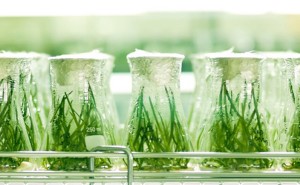
In addition to its well-equipped research laboratories, the department maintains an herbarium containing numerous classified and identified plant specimens. The department is also well-known for its specialization in paleobotany, which focuses on studying plant remains in archaeological fossils, as well as biotechnology, tissue culture, and genetic engineering. These strengths have enabled hundreds of students to successfully complete postgraduate studies and obtain Master’s and PhD degrees.
Due to the notable participation of the department’s faculty members in obtaining numerous academic, research, and applied projects at the university and national levels, and their involvement in scientific, research, and academic committees at the national level—as well as their effective contributions to accreditation and quality assurance committees—the Faculty of Science at Helwan University received accreditation in 2018. These collective efforts have significantly strengthened the department’s scientific capabilities, enabling graduates at both undergraduate and postgraduate levels to earn distinguished positions in local, regional, and international communities. Many faculty members are also engaged in teaching and research assignments abroad.